Repair or rebuild: the first question
Every driveway is only as good as the compacted stone base under the surface. When a drive goes wrong, the useful question is whether the problem is in the top layer or in that base.
Usually repairable:
- A sunken patch of block paving in the wheel tracks or around a manhole cover.
- Weeds and moss in the joints, or joint sand washed out.
- Small potholes, loose stones or fraying edges on tarmac.
- Fine cracks in tarmac or concrete that have not moved apart.
- A puddle at one low spot, or water running towards the garage.
Usually a sign the base has failed:
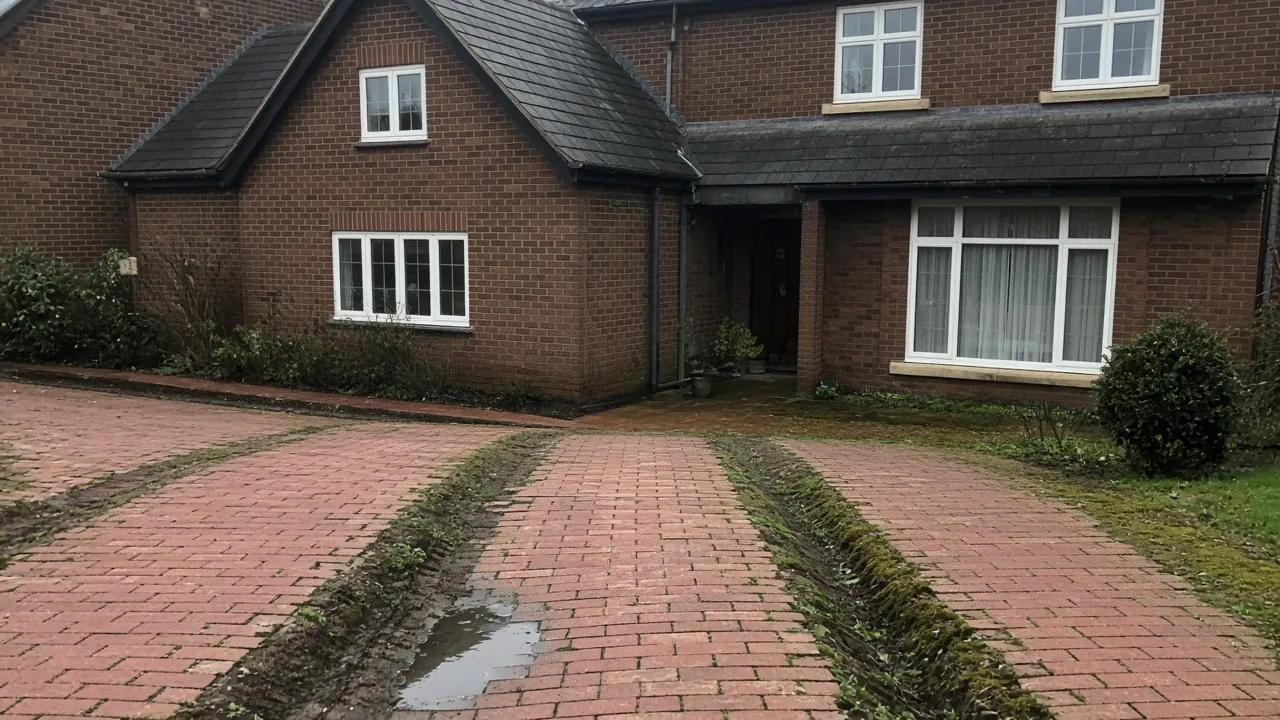
- Dips and ruts across most of the drive.
- A surface that moves, rocks or cracks again soon after it is patched.
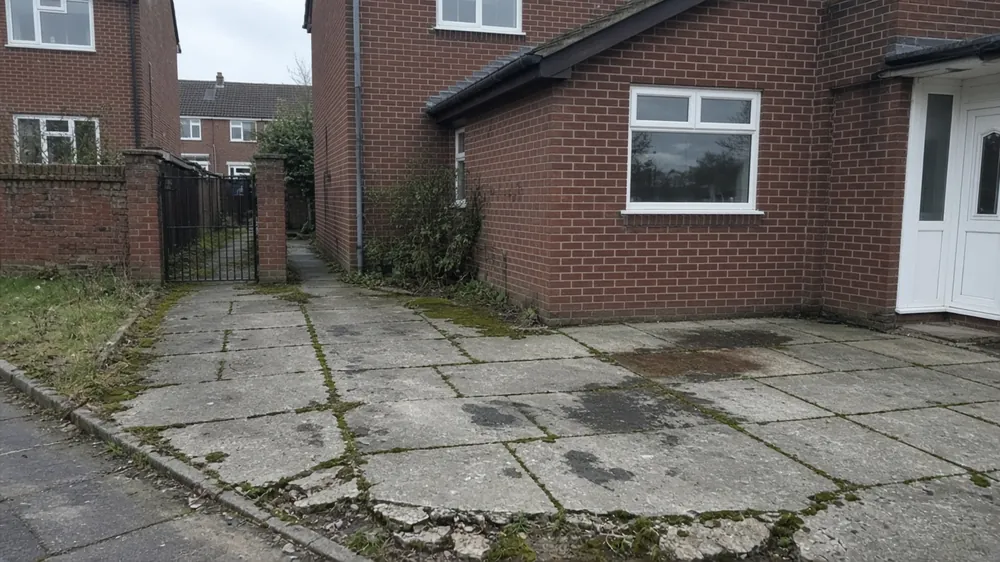
- Widespread crazing on tarmac, or a concrete drive broken into separate slabs that rock.
- Water that sits everywhere after rain.
Many of the 1960s and 1970s houses around Middlesbrough were given thin concrete or tarmac drives on very little base. Patching those can buy time, but a surveyor will often tell you honestly that a new driveway is the better use of money.
Block paving repairs
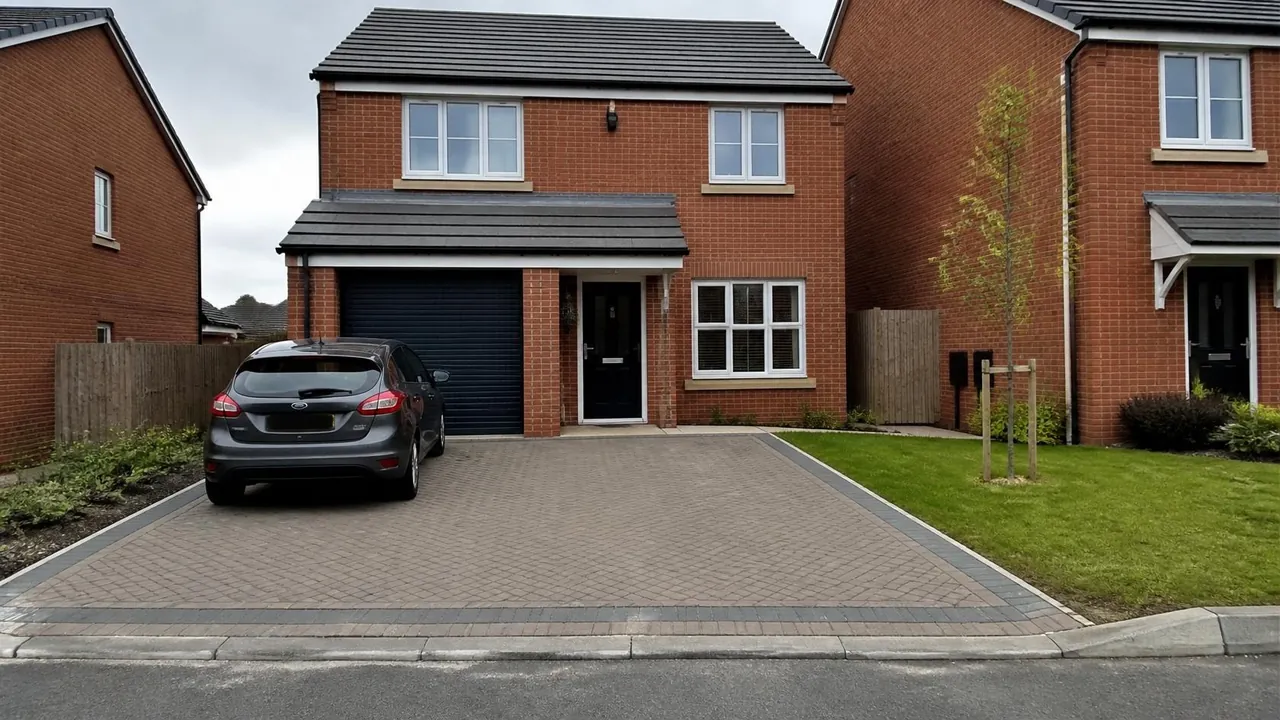
Block paving is the easiest surface to repair well, because the blocks can be lifted and put back.
- Lift the blocks in and around the sunken area, keeping them in order so the pattern can be relaid.
- Find the cause. A soft spot in the sub-base, a leaking drain, a collapsed trench from old service work or tree roots.
- Fix the base, adding and compacting fresh crushed stone where needed.
- Relay the bedding sand to the right level and fall, then put the blocks back.
- Compact and re-sand the joints with kiln-dried sand so the blocks lock together again.
Edge restraint matters. If the blocks along the edge have no proper haunching behind them, the paving can creep outwards and open up the joints. Re-setting a failed edge is often part of the repair.
Weeds in the joints are usually a sign the joint sand has washed out. Clearing the joints, re-sanding and, where suitable, applying a joint stabiliser keeps them down for longer. Older drives on the 1980s estates around Coulby Newham and Hemlington often need exactly this sort of refresh. New blocks rarely match faded old ones exactly, so a repair on an older drive will show for a while until the new blocks weather in. See block paving for how a drive should be built.
Tarmac repairs and resurfacing
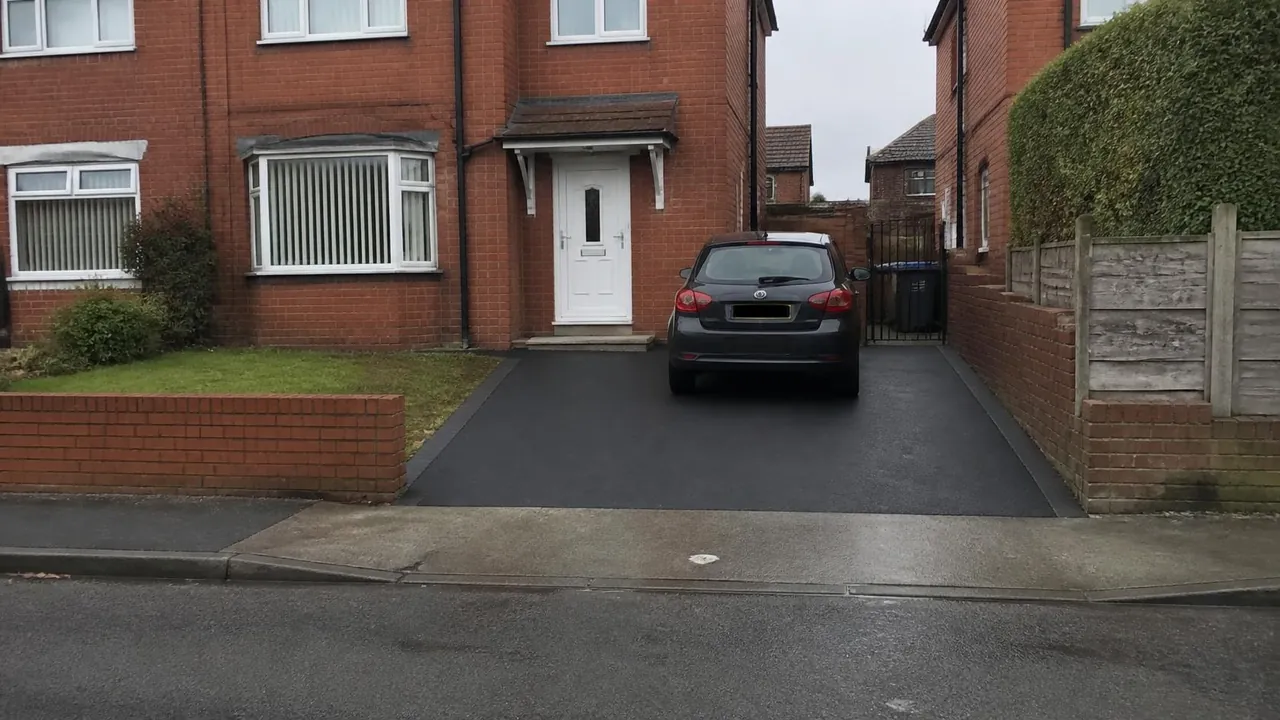
Potholes and patches. The damaged area is cut back to a neat square edge, cleaned out, given a tack coat and filled with hot material, then rolled and the joint sealed. Cold-lay repair bags from DIY stores are fine for a temporary fix but do not compact or bond in the same way.
Cracks. Fine cracks can be cleaned and filled with a bitumen crack sealant to stop water getting in and freezing. Cracks that keep widening point to movement underneath.
Resurfacing. If the drive is worn and grey but not sinking, a new surface course can be laid over the top after repairs and a tack coat. Check that raising the level will not cause problems at the garage door, doorstep or air bricks: the finished drive needs to stay at least 150mm below the damp-proof course. More detail on our tarmac driveways page.
Be wary of anyone knocking on the door with "leftover tarmac" for your drive. Trading Standards regularly warn about this. A genuine installer measures up, explains what is being done and gives you a written quote.
Resin, gravel and concrete
Resin bound. Small damaged areas can be cut out and relaid, but a patch is hard to match exactly for colour, especially once the original has weathered. Cracks in a resin drive usually come from cracks in the base below, so the base needs fixing first. See resin driveways.
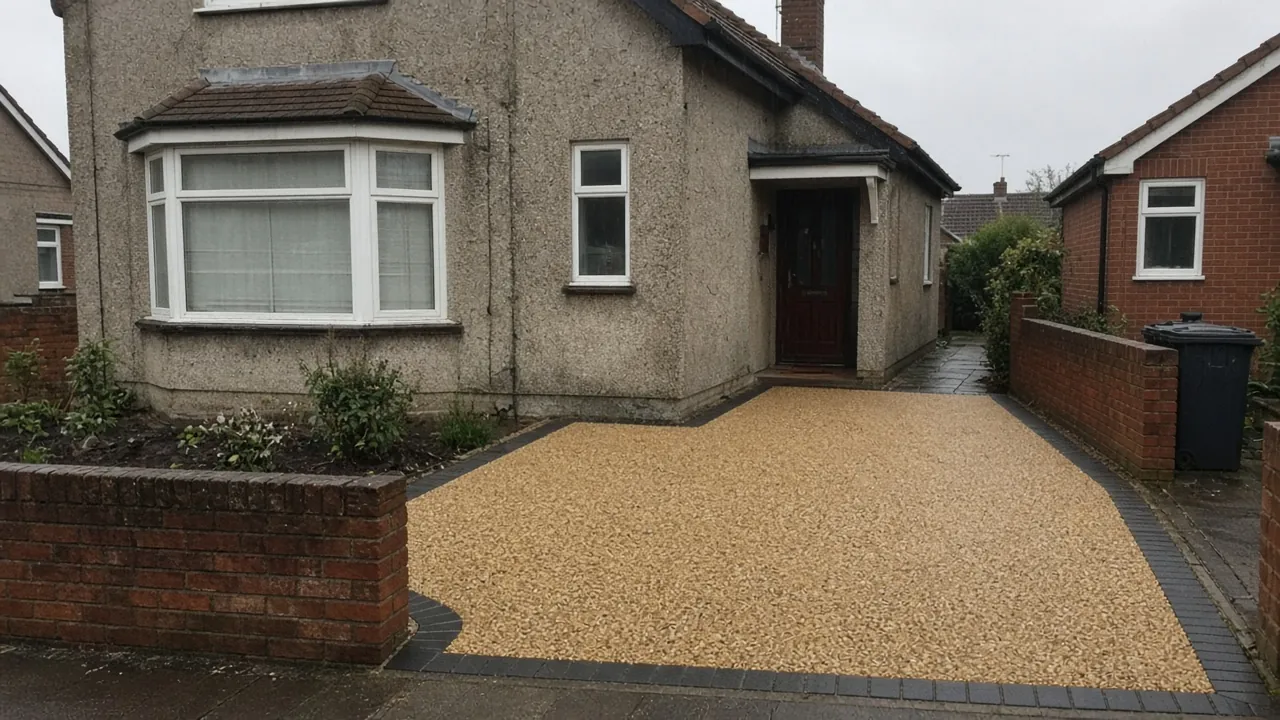
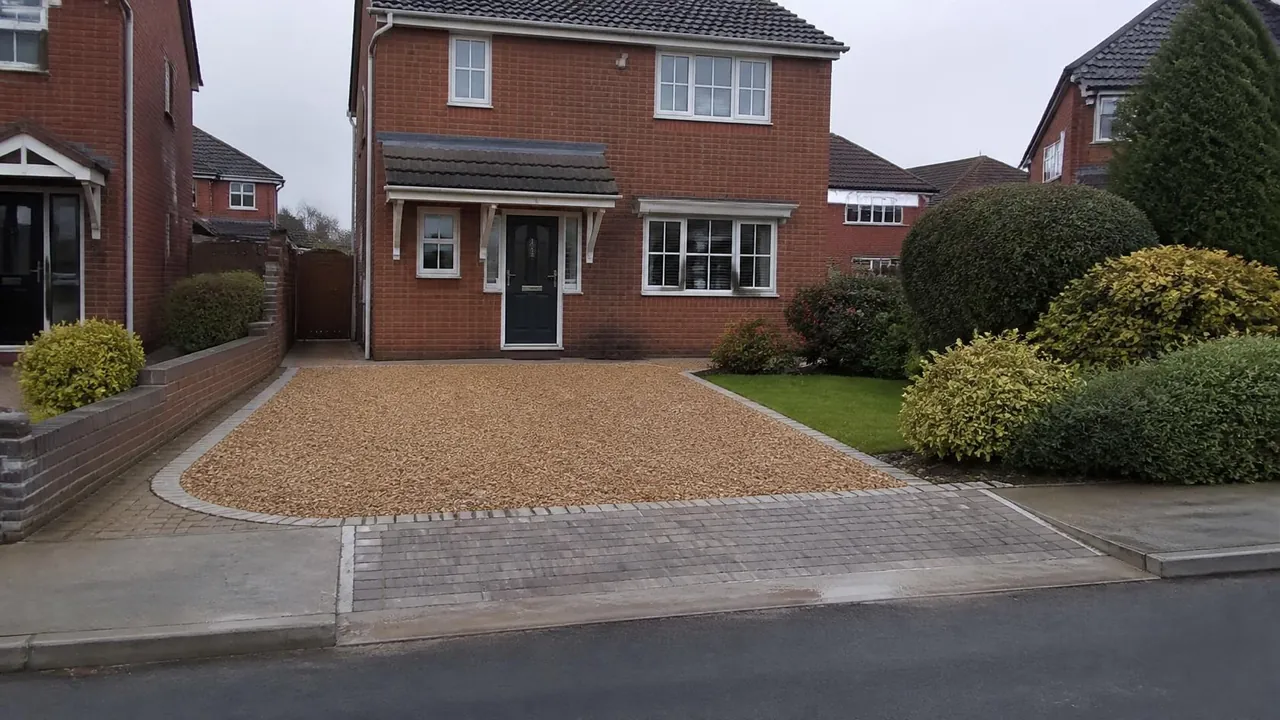
Gravel. Bare patches and ruts are put right by raking out, topping up with matching stone and, on drives that keep rutting, laying a stabilising grid underneath. Stones escaping onto the pavement are cured with a solid apron or a raised edge at the entrance. See gravel driveways.
Concrete. Fine cracks can be sealed, but concrete repairs rarely blend in, and slabs that have sunk or rocked do not repair well. Breaking out and replacing the worst sections, or the whole drive, is often the long-term answer.
Drainage problems
A lot of driveway damage comes from water. On Middlesbrough's heavy clay, water does not soak away quickly, so a drive with the wrong fall or a blocked channel drain can hold puddles, freeze in winter and soften the base. Typical fixes include clearing or adding a channel drain, re-levelling a section to restore the fall, or adding a soakaway or permeable strip. Our guide to drainage on clay soil explains the options.
Planning. Small repairs are not a planning matter. Replacing or resurfacing a whole front drive is treated like a new one: in England, more than five square metres of impermeable surface draining onto the road needs planning permission, unless it drains to a lawn, border or soakaway on your land. See planning permission for driveways.
Damage on the pavement side
If the dropped kerb or the pavement in front of your drive is broken, that part belongs to the highway authority, not to you. Report it to the council rather than paying for it privately: Middlesbrough Council for most of the town, or see the Ormesby page for homes there. Widening the drive so it no longer lines up with the dropped kerb needs a new crossing licence. See dropped kerbs.
What affects the price of a repair
- The surface. Block paving can usually be lifted and relaid with the same blocks. Tarmac and resin need new material.
- The size and number of areas to be repaired.
- What is causing the fault. A drain or base problem takes more work than a surface fix.
- Matching. Sourcing blocks or aggregate to match an older drive.
- Access and waste. Skip or grab lorry for any material taken away.
A repair quote should say what is causing the problem and what will be done about it, not just "make good".
Questions people ask
Can sunken block paving be fixed without replacing the whole drive?
Usually, yes. The blocks in the sunken area are lifted, the base underneath is made good, the bedding sand is relaid and the same blocks go back down and are compacted and re-sanded.
Is it worth resurfacing an old tarmac drive?
If the drive is worn but not sinking or breaking up, a new surface course over the old one is often good value. If it has ruts, dips or widespread cracks, the base has probably failed and resurfacing will not last.
Why do weeds keep growing in my block paving?
Usually because the joint sand has washed out, leaving room for seeds and moss. Clearing and re-sanding the joints, and keeping the drive swept, makes a big difference.
Who repairs a broken dropped kerb outside my house?
The kerb and pavement are part of the public highway, so report it to the council. Middlesbrough Council covers most of the town. Ormesby is covered by a different council, explained on the Ormesby page.
Can a resin driveway be patched?
Small areas can, but an exact colour match is difficult, and cracks usually come from the base below. A surveyor can tell you whether a patch or a resurface makes more sense.
Do I need planning permission to resurface my drive?
Not for small repairs. Resurfacing or replacing a whole front drive follows the same rules as a new one, so check the drainage and the 5m² rule first.