How a gravel driveway should be built
The difference between a gravel drive that works and one that does not is almost entirely in the preparation. Loose stone tipped onto soil sinks, ruts and mixes with mud within a season. A well-built gravel drive follows these steps:
- Excavation to around 150mm to 200mm, removing turf, topsoil and roots. On Middlesbrough's clay soils, it is worth going deeper in soft spots.
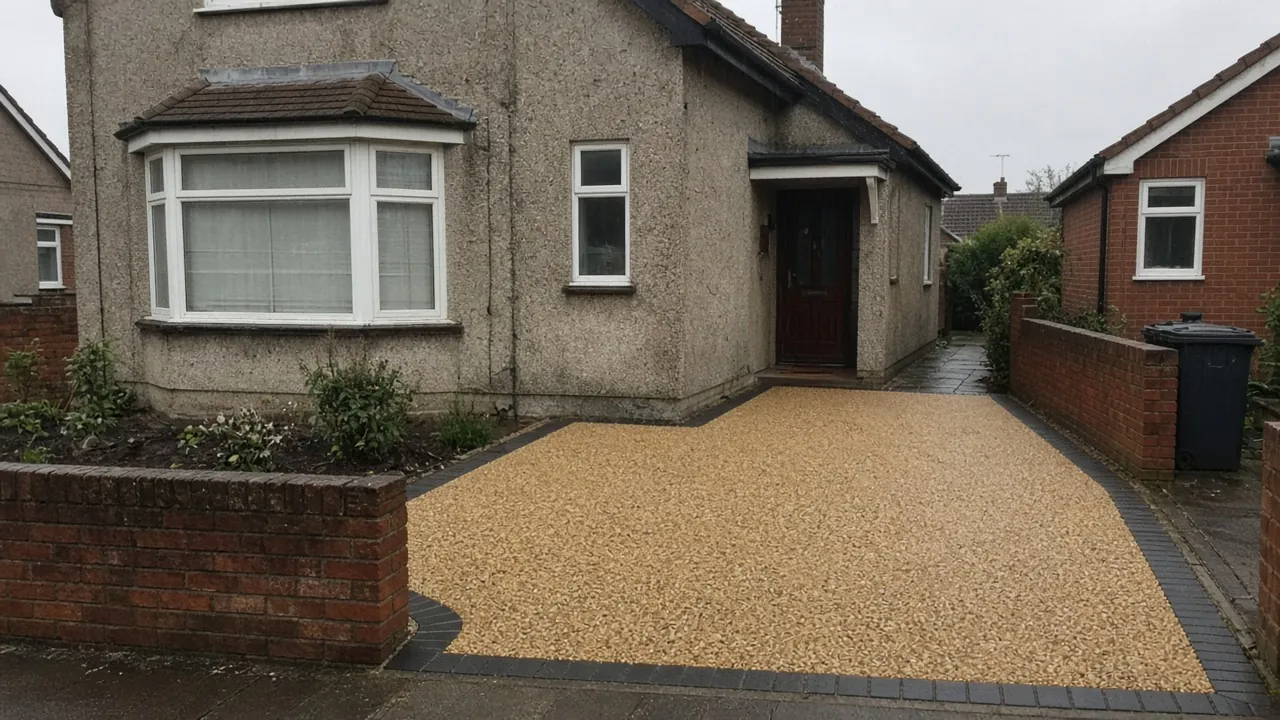
- Edging. Gravel must be contained. Concrete kerbs, block paving edges, sleepers or steel edging hold the stone in and stop it spilling onto lawns and pavements. A raised lip or a block paving apron where the drive meets the pavement keeps stones off the footpath.
- Sub-base. Compacted crushed stone (Type 1 or a free-draining equivalent) gives the drive its strength. Because gravel is permeable, many installers use a clean, open-graded stone so water can drain down through every layer.
- Membrane. A geotextile membrane over the sub-base stops weeds coming up from below and stops the gravel mixing with the layer beneath. It does not stop weeds from seeds that land on top.
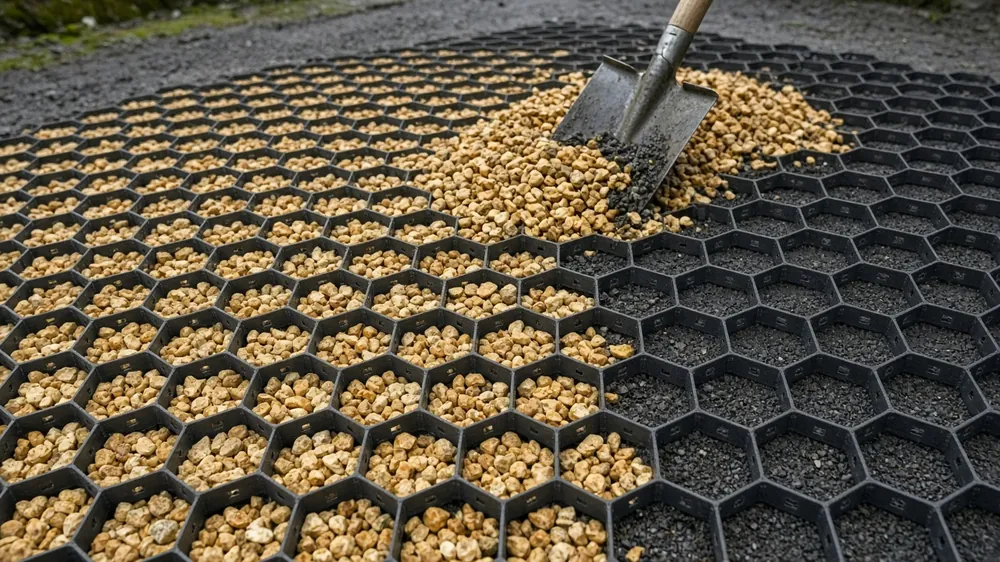
- Stabilising grid (recommended). Plastic honeycomb grids are laid over the base and filled with gravel. The cells hold the stone in place so it does not migrate, rut or pile up under tyres, and the surface stays level.
- Gravel. Spread to the right depth. On a grid, that means filling the cells and adding a thin covering layer, usually around 10mm to 20mm above the top of the grid. Without a grid, around 40mm to 50mm of stone is typical. Too much gravel is as bad as too little, as cars and feet sink into it.
A straightforward gravel driveway often takes one to three days. It can be used straight away, which makes it a good option if you need to park quickly.
How much does a gravel driveway cost in Middlesbrough?
Gravel is the cheapest driveway surface. Checkatrade's April 2026 guide puts it at around £60 per square metre for supply and installation:
| Driveway size | Approximate cost |
|---|---|
| Small, single car (20m²) | about £1,400 |
| Medium, two cars (50m²) | about £3,000 |
| Large, multiple cars (100m²) | about £5,000 |
Source: Checkatrade driveway cost guide, April 2026. National averages; your written quote reflects your drive.
Price drivers:
- Grids. Stabilising grids add to the cost per square metre but cut maintenance a great deal and make the drive far easier to walk and push things across.
- Edging. Block or concrete kerbs cost more than timber, but last longer.
- Stone type. Local crushed limestone or granite is cheaper than decorative slate, flint or coloured aggregates.
- Depth of dig and disposal. Removing an old concrete drive is the biggest variable.
- Aprons and borders. A block paving or tarmac apron at the entrance, so the stone does not reach the road, is money well spent.
Because it drains naturally, gravel rarely needs separate drainage channels, which helps keep the total low compared with impermeable surfaces.
Choosing the right stone
Not all gravel is suitable for driveways.
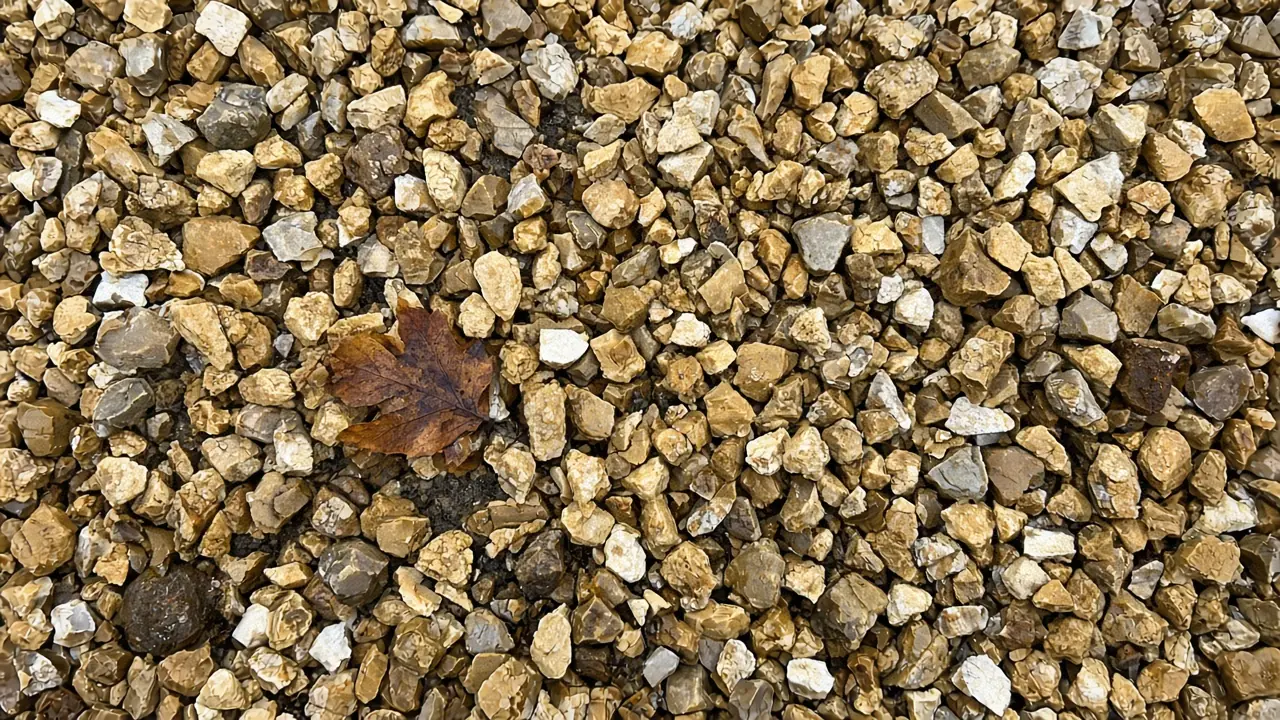
- Angular stone is better than round. Crushed, angular gravel locks together; round pea gravel rolls around, sinks under tyres and gets carried into the house.
- Size. Stone around 14mm to 20mm is a good balance for driveways: big enough not to stick in tyre treads and shoes, small enough to walk on comfortably. Very small stone gets picked up; very large stone is hard going underfoot.
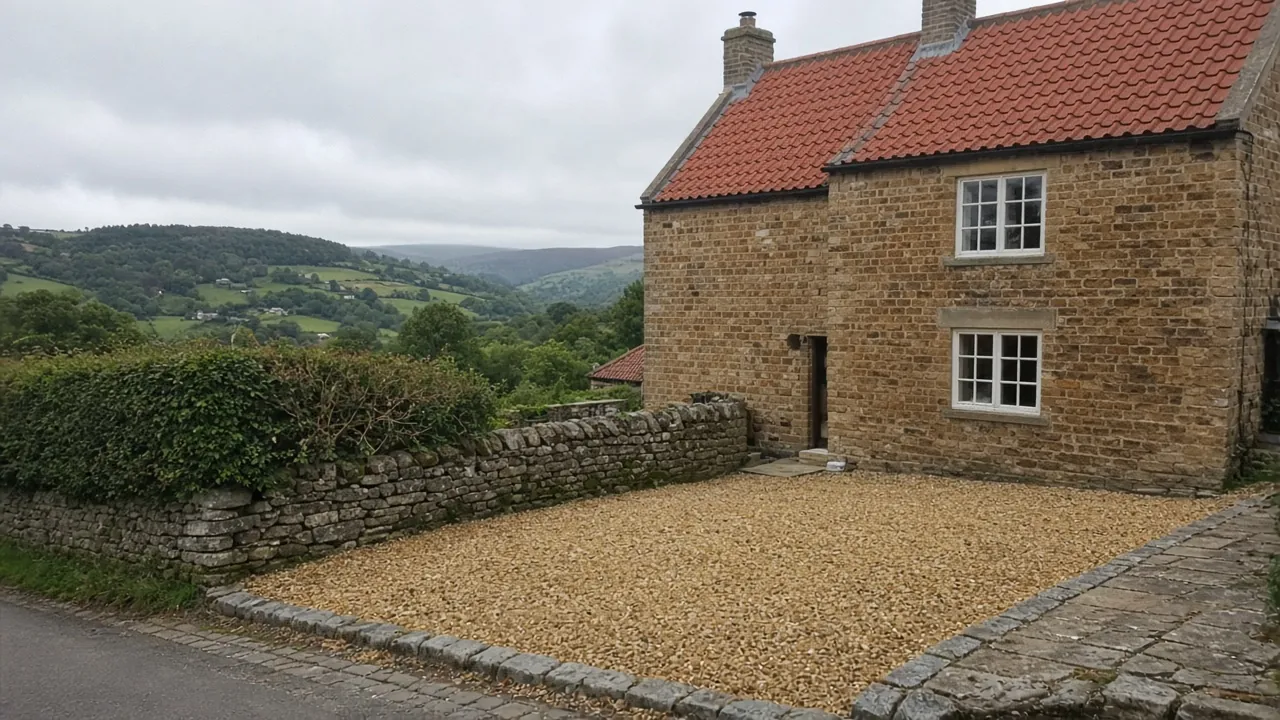
- Colour. Buff and golden gravels brighten a drive and suit sandstone and brick houses. Grey granite and blue slate look sharper and more modern. Mixed colours hide dirt and leaves.
- Grid colour. Grids come in black, white or neutral tones; a grid colour close to the stone hides it if the gravel thins.
It is worth looking at samples on your own drive, wet and dry. Lighter stone shows dirt and moss more readily, especially under trees.
Who gravel suits, and who it does not
Gravel works well for:
- Larger front gardens where the cost of a hard surface would be high.
- Rural and edge-of-town properties, where gravel looks at home, such as around Stainton, Thornton, Great Ayton or Nunthorpe.
- Homeowners who like a little noise underfoot. The crunch of gravel is often mentioned as a deterrent, as you hear when someone walks up.
- Front gardens where drainage is tricky, because rain soaks straight through.
- Anyone wanting a quick, affordable upgrade.
It is less suitable for:
- Steep slopes, where stone migrates downhill even with grids.
- Wheelchair users, mobility scooters and pushchairs, unless the gravel is on a grid with a shallow covering, or there is a hard path alongside.
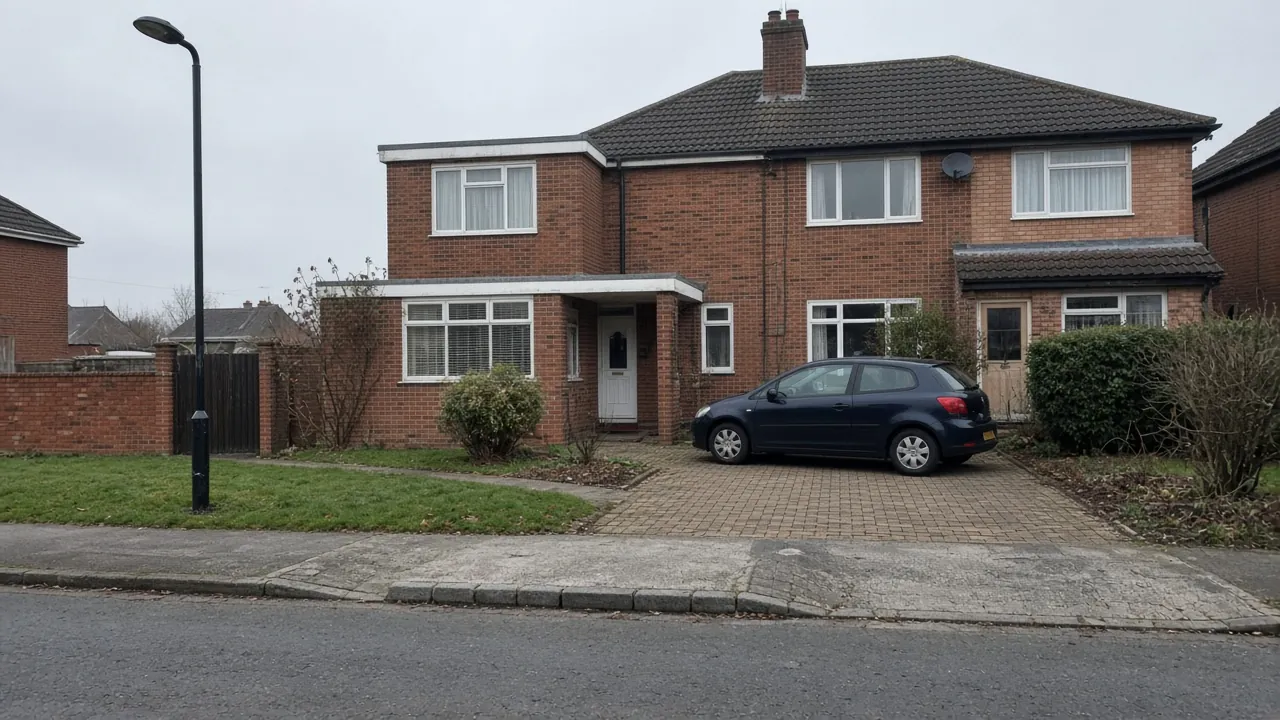
- Drives that open straight onto a busy pavement, unless an apron or lip stops stones reaching the footpath.
- Owners who want zero upkeep. Gravel needs raking and occasional top-ups.
Planning, drainage and upkeep
Planning. Gravel is a permeable surface, so under the rules in force in England since October 2008 a gravel driveway on a front garden does not normally need planning permission, however large. Extra controls can apply in conservation areas and for listed buildings. In Middlesbrough these include Linthorpe, Albert Park and Linthorpe Road, Acklam Hall, Marton and The Grove, Nunthorpe and Poole, Ormesby Hall, and Stainton and Thornton. If your new drive needs a dropped kerb, you need a council licence; see dropped kerbs.
Upkeep.
- Rake every few weeks to level the stone and keep it looking fresh.
- Top up gravel every year or two where it has thinned.
- Pull or treat weeds from seeds landing on top; a membrane stops those from below.
- Clear leaves before they rot into the stone.
- Check edging and repair any gaps where stones escape.
Gravel compared with resin, block and tarmac
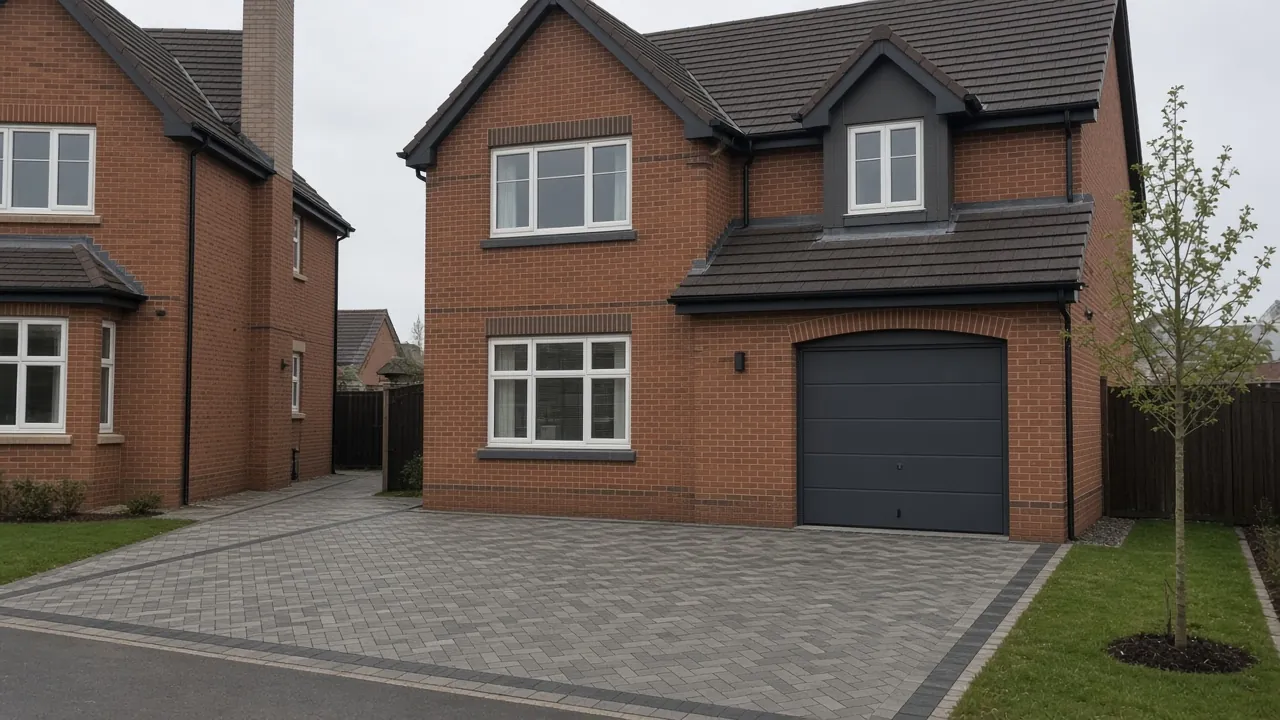
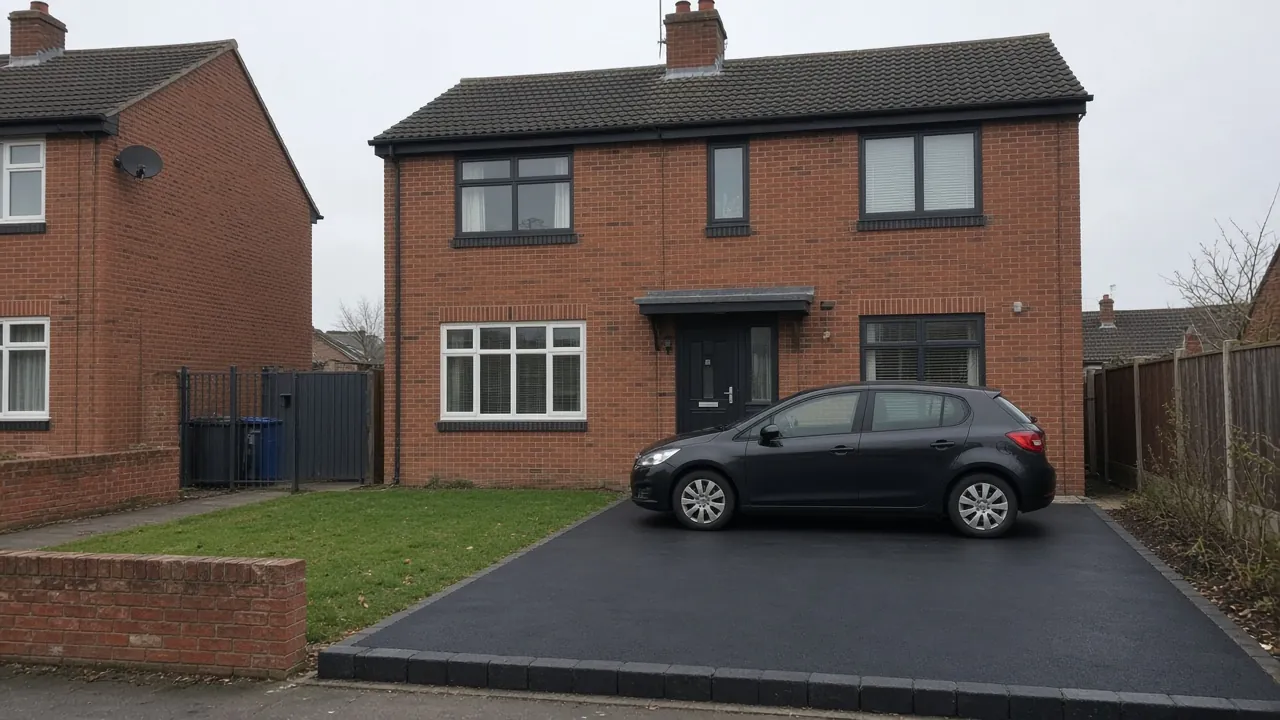
Resin bound gives a gravel look with no loose stones, but costs roughly twice as much per square metre. Tarmac costs more, but is fully solid and lower maintenance. Block paving costs more again but adds pattern and colour. Many drives combine materials, such as a block paving apron and border with gravel in the middle, which gets most of the look and practicality of a hard drive for less.
Questions people ask
What is the cheapest driveway surface?
Gravel, at around £60 per square metre on Checkatrade's April 2026 UK averages. It also usually avoids drainage costs because rain soaks straight through.
Do gravel driveways need planning permission?
Not normally on a front garden, because gravel is permeable. Check first if you live in a conservation area or a listed building, and remember that a dropped kerb needs a separate council licence.
What is the best gravel for a driveway?
Angular crushed stone around 14mm to 20mm. It locks together better than round pea gravel and is less likely to stick in tyres or shoes.
Do I need a grid under a gravel driveway?
It is not essential, but a stabilising grid stops stones moving, rutting and piling up, keeps the surface level and makes it much easier for wheels and feet.
How deep should gravel be on a driveway?
Without a grid, about 40mm to 50mm on top of a compacted sub-base. With a grid, just enough to fill the cells and cover them by around 10mm to 20mm.
How do I stop gravel going onto the pavement?
Use a solid edge or a block paving or tarmac apron at the entrance, and a stabilising grid so the stone does not get carried out by tyres.