Typical time on site by surface
These are typical figures for a two-car drive of around 50m², on a straightforward site. Larger drives, slopes, walls, steps and lots of cuts take longer.
| Surface | Typical days on site | When you can walk on it | When you can drive on it |
|---|---|---|---|
| Gravel | 1 to 3 days | Straight away | Straight away |
| Tarmac | 1 to 3 days | Within hours | Usually after a day or two |
| Block paving | 3 to 5 days | Straight away | Usually straight away once compacted and sanded |
| Resin bound | 2 to 5 days including the base | After several hours | Usually after 24 to 48 hours, depending on temperature |
The surface itself is rarely the slow part. Most of the time goes into what happens underneath:
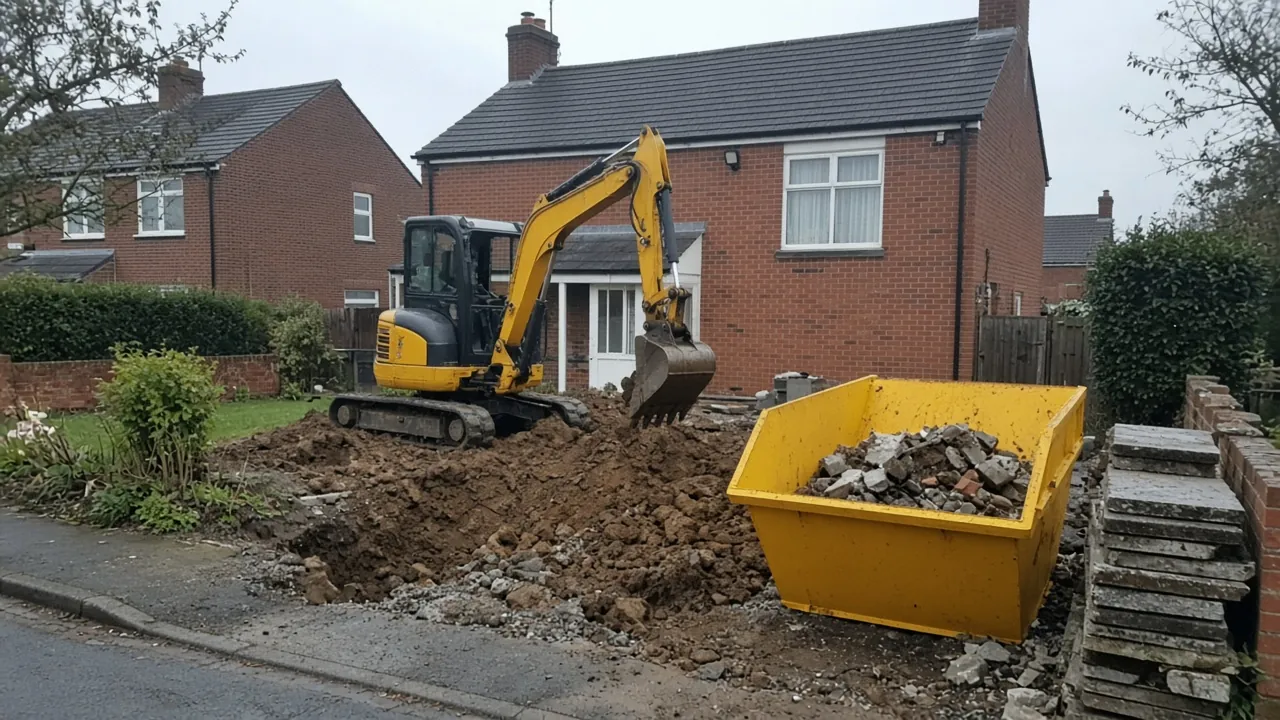
- Breaking out an old drive. Lifting turf is quick. Breaking out a 1960s or 1970s concrete slab with a breaker, loading it and removing it can take a full day or more on its own.
- Excavation and waste. Digging to the right depth, often 150mm to 250mm depending on the surface and ground, and getting the spoil away.
- Edging. Kerbs and edgings are usually set in concrete, which needs time to firm up before the surface goes against them.
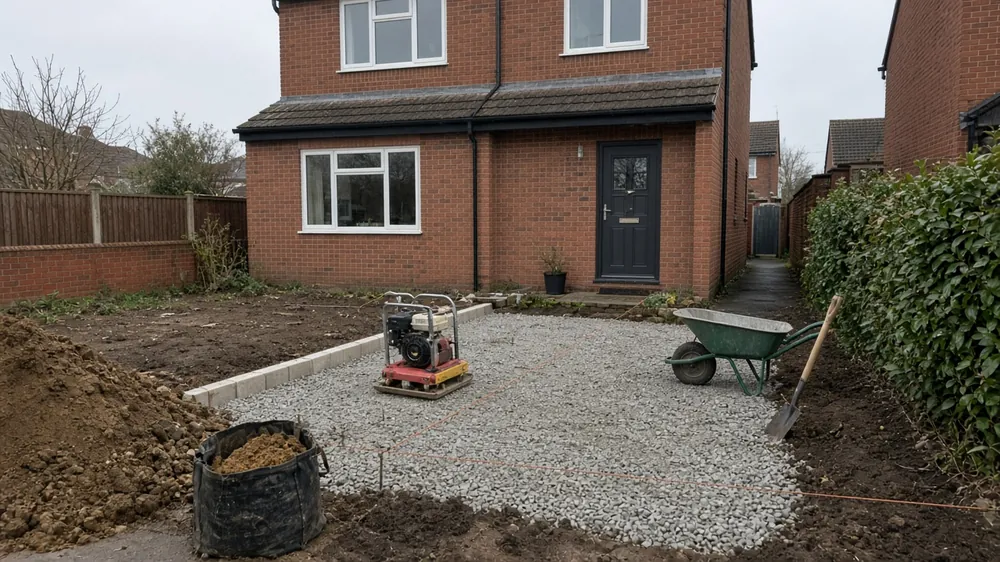
- Sub-base. Crushed stone laid and compacted in layers. On clay, a membrane goes down first and the sub-base may be deeper.
- Drainage. Channel drains and soakaways add time, especially digging a soakaway in clay.
For resin, a new porous base (often open-graded tarmac) usually has to be laid first, and the resin goes on afterwards in dry weather. If resin is going over a sound existing base, the job can be much quicker.
What happens day by day
A block paving double drive on a typical Middlesbrough semi might run like this:
Day 1: preparation and excavation. The area is marked out, levels are set against the house and pavement, and the old surface and soil are dug out. Waste goes into a skip or grab lorry. If a skip has to sit on the road, it needs a skip licence from the council.
Day 2: edging and drainage. Kerb edgings are set on a concrete bed. Any channel drain or soakaway is installed. A geotextile membrane goes down on soft or clay ground.
Day 3: sub-base. Crushed stone is laid and compacted in layers with a plate compactor or roller until it is firm and at the right falls.
Day 4: laying. A sand bed is screeded level and the blocks are laid in the chosen pattern, with cuts around edges, drains and covers.
Day 5: finishing. Kiln-dried sand is brushed into the joints, the surface is compacted, more sand is added, and the site is cleaned up.
Tarmac compresses the last days into one: the hot material is spread and rolled while it is still warm, so the surface goes down in hours. Gravel on a grid is similarly quick once the base is in. Resin is mixed in small batches and trowelled by hand, so a dry day is essential.
Curing, settling and the first few weeks
Tarmac. You can usually walk on fresh tarmac within hours and drive on it after a day or two. For the first few weeks, especially in warm weather, avoid turning the steering wheel while stationary, sharp kickstands and heavy point loads such as skip feet, as the surface is still soft enough to mark.
Resin bound. Resin needs time to cure. It is normally walkable after several hours and ready for cars after 24 to 48 hours, longer in cold weather. Keep it clear of chemicals and oil while it cures.
Block paving. Once compacted and sanded, it can usually be used straight away. The jointing sand settles over the first few weeks; a top-up is normal.
Gravel. Usable immediately. Expect to rake and top up thin spots in the first months as it beds in.
Concrete edgings and drains. These keep hardening for days after the surface is finished, another reason to be gentle with a new drive in the first week.
Things that add time
Council approval for a dropped kerb. This is the biggest variable. In Middlesbrough, the council's assessment and licence each carry 14 days' notice in its 2026/27 fee list. In North Yorkshire, an approved contractor must notify the council at least seven working days before starting work on a crossing. Stockton and Redcar and Cleveland handle crossings through their own application and quote processes. Apply well before you want the drive finished. See our dropped kerbs page.
Planning permission. If your drive needs it, for example in some conservation areas, or for an impermeable front garden, allow for the time a planning application takes. Our planning guide explains when it applies.
Weather. Resin cannot be laid on a wet base or in rain. Tarmac does not lay well in heavy rain or hard frost, and wet ground slows excavation on clay. Spring to early autumn is the easiest window, though many jobs go ahead year-round.
What is found underground. Old foundations, buried concrete, tree roots, shallow pipes and cables or a hidden soakaway can all slow excavation.
Access. Terraces with no side access mean everything goes through the front by barrow. That can add a day or more.
Extras. Walls, steps, gate piers, lighting and patios done at the same time all add days.
Booking. Good installers are often booked weeks ahead, particularly in spring and summer. The time from survey to start date is often longer than the job.
Questions people ask
How long does it take to lay a block paving driveway?
A typical two-car block paving drive takes three to five working days, longer with lots of cuts, curves, steps or drainage. You can usually use it once the final compaction and sanding are done.
How long before I can drive on a new tarmac driveway?
Usually after a day or two. Avoid turning your wheels while stationary and heavy point loads for the first few weeks, particularly in warm weather.
How long does resin take to cure?
Usually 24 to 48 hours before cars, depending on temperature, and several hours before you can walk on it. Cold weather slows curing.
Can a driveway be laid in one day?
A small gravel or tarmac drive on an existing sound base sometimes can. Most new drives need at least two to three days because of excavation, edging and sub-base.
How long does it take to get a dropped kerb approved?
It varies by council. Middlesbrough's assessment and licence each carry 14 days' notice, and building the crossing takes extra time. Apply early, before booking the drive.
Does rain delay driveway work?
It can. Resin cannot be laid on a wet base, and heavy rain or frost affects tarmac and excavation on clay. Block paving is the least weather-sensitive.