How a block paving driveway is built
Block paving looks simple from the top: rows of small concrete or clay blocks. Underneath, it is a layered system, and each layer has a job.
- Excavation. The area is dug out to around 200mm to 250mm for a driveway that takes cars, deeper on soft or clay ground. Old surfaces, turf and topsoil go.
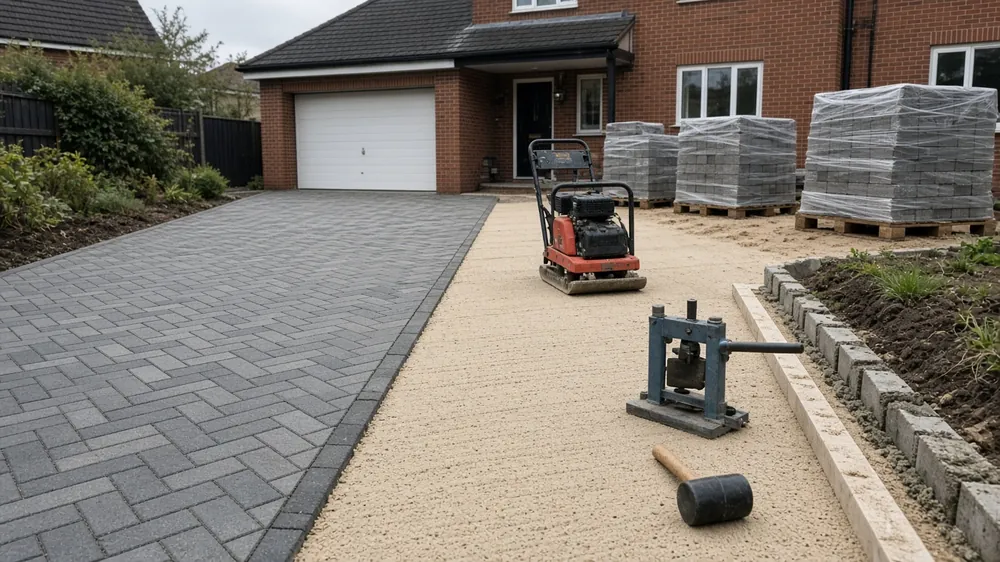
- Edge restraints. Kerbs or edging blocks are set in concrete around the perimeter. They stop the field of blocks spreading sideways under car tyres, and they are the part most often skimped on. If the edges move, the whole driveway starts to open up.
- Sub-base. Crushed stone (Type 1) is laid in layers of about 50mm to 75mm and compacted with a vibrating plate between each one, typically to a finished depth of 100mm to 150mm. A geotextile membrane under the sub-base helps on clay.
- Laying course. A screeded bed of sharp sand, roughly 30mm to 50mm, gives the blocks something to bed into.
- Blocks. Blocks are laid in the chosen pattern, cut to fit around edges and manholes with a block splitter or saw, then compacted with a plate fitted with a rubber mat so the faces are not scuffed.
- Jointing. Kiln-dried sand is brushed into the joints and the surface compacted again. The sand locks the blocks together, so it really matters.
The finished surface should fall slightly away from the house, usually around 1 in 60 to 1 in 80, towards a drain, soakaway or garden so water does not sit against your walls or run into the garage.
Most domestic driveways use blocks 50mm thick. Heavier use, such as vans or a shared drive, may call for 60mm or 80mm blocks. Blocks come in many sizes, and a mix of sizes in one area gives a more natural, tumbled look.
A two-car block paving driveway typically takes three to five days. Lots of curves, cuts and steps push that up. It can usually be used as soon as the final compaction and sanding are done, unlike tarmac or resin, which need curing time.
How much does block paving cost in Middlesbrough?
Checkatrade's April 2026 cost guide puts block paving at about £100 per square metre for supply and installation, split roughly evenly between materials and labour:
| Driveway size | Approximate cost |
|---|---|
| Small, single car (20m²) | about £2,400 |
| Medium, two cars (50m²) | about £5,000 |
| Large, multiple cars (100m²) | about £8,000 |
Source: Checkatrade driveway cost guide, April 2026. National averages; your written quote is what counts.
The things that move a block paving price:
- Block choice. Plain grey or charcoal concrete blocks are the cheapest. Tumbled, textured, multi-colour or clay pavers cost more per square metre.
- Pattern. Herringbone needs more cuts than stretcher bond, so it takes longer, but it is the strongest pattern for cars.
- Permeable blocks. Permeable block paving needs a different, open-graded sub-base and costs more than standard blocks. It can save the cost of drainage channels or planning permission.
- Borders and features. Contrasting borders, curved edges, circles or banding all add labour.
- Digging out and disposal. Breaking out old concrete is slower and generates more waste than lifting turf.
- Drainage. A channel drain in front of a garage or along the edge of a slope adds to the price.
- Steps, walls and ramps where the drive meets the path or the house.
It is worth getting quotes that list the excavation depth, sub-base thickness and type of edging, so you are comparing like with like.
Choosing blocks, patterns and colours
Concrete or clay? Concrete blocks are cheaper, come in many colours and textures, and are what most Teesside driveways use. Clay pavers are fired like bricks, hold their colour for decades and suit older red-brick houses, such as the Victorian and Edwardian streets of Linthorpe, but they cost more and are harder to cut.
Pattern.
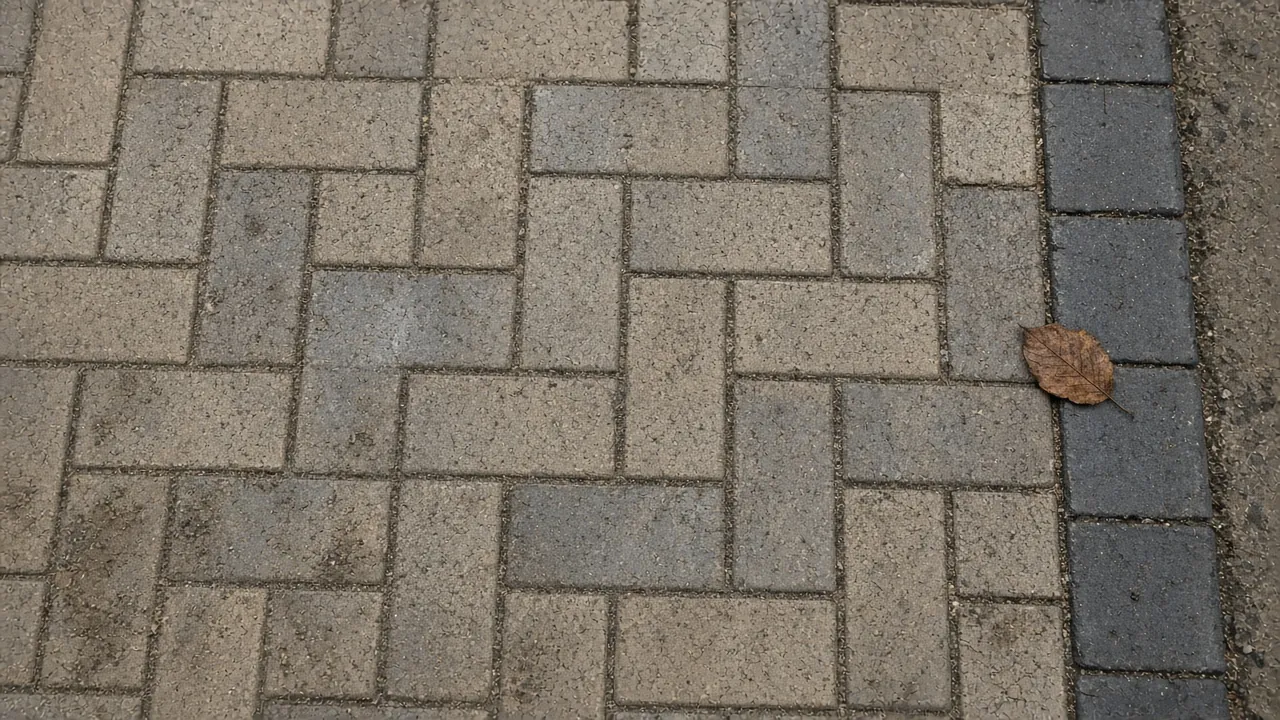
- Herringbone (at 45 or 90 degrees to the house) interlocks in every direction and resists tyres turning. It is the recommended pattern for driveways.
- Stretcher bond (rows like brickwork) is quicker to lay and suits paths and narrow drives, but is weaker under turning cars if the rows run the same way as the traffic.
- Basketweave and parquet patterns look good on patios and smaller areas but are less suited to heavy use.
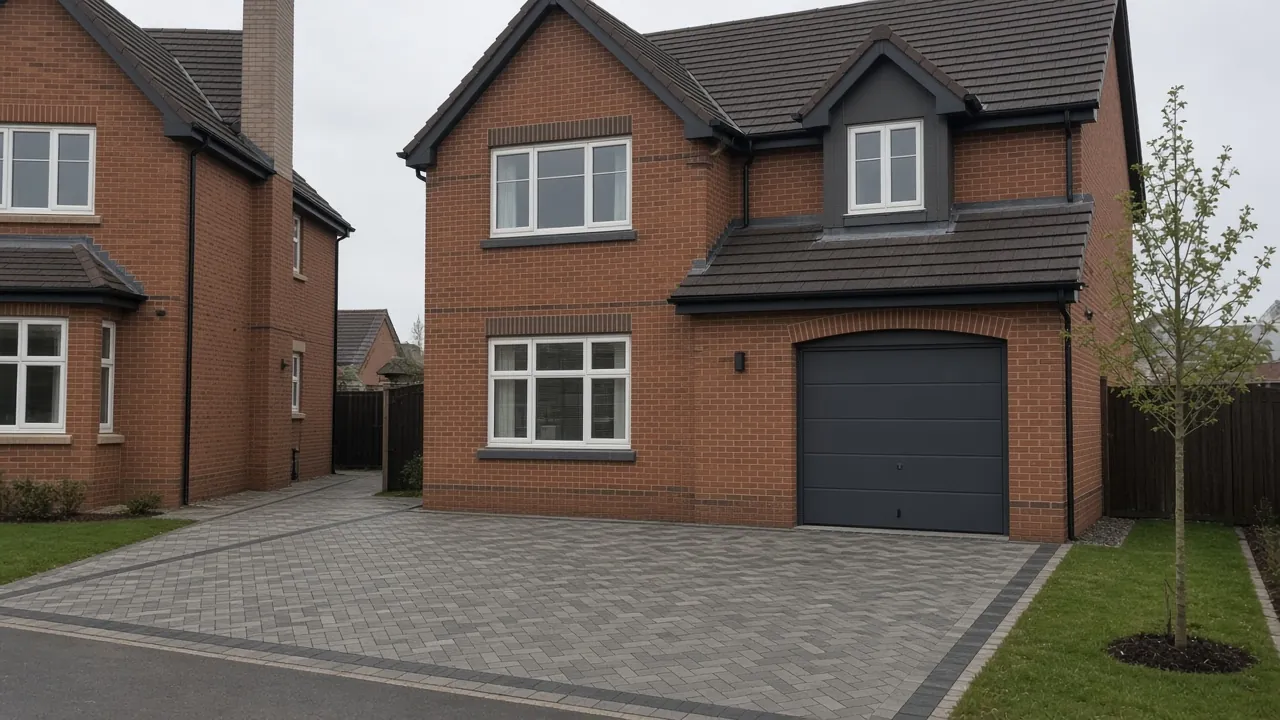
Colour. Charcoal and brindle (a mix of reds, browns and greys) hide oil marks and tyre scuffs well. Very light colours show dirt. Many people choose a contrasting border, such as charcoal around brindle, to frame the drive and match it to the house's brick or window frames.
Ask to see samples outside, in daylight and wet as well as dry. Blocks often look quite different on a showroom shelf.
Front gardens, rainwater and planning rules
Standard concrete block paving is not porous. The joints let a little water through, but not enough to count as a permeable surface under the planning rules. Since October 2008, if you lay more than five square metres of impermeable surface on a front garden in England and it drains onto the road, you need planning permission.
You have three ways to stay within permitted development:
- Use permeable block paving. These blocks have wider joints filled with small grit, laid on an open-graded stone base that stores and releases water slowly.
- Direct the water to a soakaway, rain garden or lawn on your own property, using the fall of the drive and channel drains.
- Keep the impermeable area to five square metres or less, which is rarely practical for a driveway.
Middlesbrough's heavy clay soils drain slowly, so a soakaway needs to be sized properly. This is something to talk through at the survey. Extra checks apply in conservation areas and for listed buildings. And if you need a new or wider dropped kerb, you need a licence from the council's highways team regardless; see dropped kerbs.
Looking after block paving
Block paving is hard-wearing, but it is not maintenance-free.
- Weeds and moss grow in the joints, mostly from seeds blown in on top. Brushing regularly and topping up the jointing sand keeps them down. A weed-control product can be used in spring.
- Re-sanding. Pressure washing blows sand out of the joints. After cleaning, brush in fresh kiln-dried sand so the blocks stay locked together.
- Sealing is optional. A sealant can help hold the sand in place, lift colour and resist oil, but it needs reapplying every few years.
- Oil and rust stains are easier to remove if treated quickly.
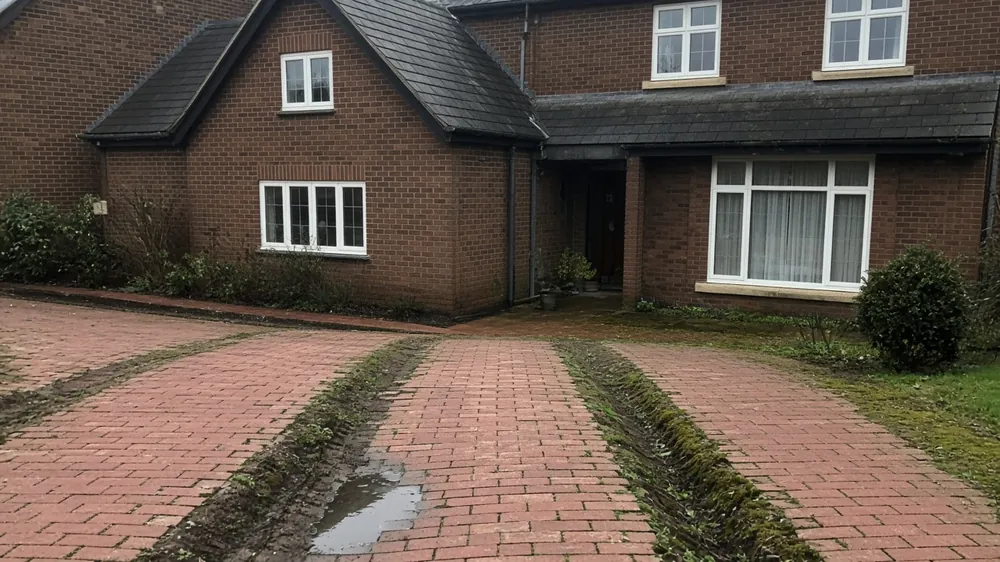
- Sinking or rutting usually means the sub-base or edging has failed underneath. The good news is that the affected area can be lifted, the base rebuilt and the same blocks relaid, which is the biggest advantage block paving has over poured surfaces.
Installer guides commonly quote 20 to 30 years for a well-built block paving driveway, and longer for clay pavers.
Questions people ask
How much does block paving cost per m² in 2026?
About £100 per square metre for supply and installation, on Checkatrade's April 2026 UK averages. Premium blocks, permeable systems, herringbone with lots of cuts and difficult excavation push the price up.
What is the best pattern for a block paved driveway?
Herringbone, laid at 45 or 90 degrees. Its interlocking shape spreads the load of turning cars in every direction, so the blocks are less likely to creep or rut.
Does block paving need planning permission?
Standard blocks on more than 5m² of front garden need permission unless the water drains to a lawn, border or soakaway on your property. Permeable block paving does not usually need permission.
How long does block paving last?
Around 20 to 30 years when it is built on a good sub-base with solid edging, according to installer and industry guides. Clay pavers can last longer.
Can you lay block paving over concrete?
It is possible on a sound slab with drainage, but most installers prefer to break out the concrete and build a proper sub-base, because water trapped on the slab can wash out the sand bed.
Why are weeds growing in my block paving?
Weed seeds settle in the jointing sand from above. Brushing regularly, topping up sand after pressure washing, and sealing the joints all help.